News
Gorenje's Incircular project aims to reuse plastic waste in production
09.04.2025
Plastics have long been a double-edged sword for modern society, offering unparalleled convenience and durability, while also posing a significant environmental burden and challenges. This dilemma is directly addressed by the Incircular project, funded by the European Union through the Interregional Innovation Investment Facility. The project aims to redefine the life cycle of plastics, transform waste into valuable resources and set a new standard for a circular economy that embodies the EU’s commitment to innovation, sustainability and industrial symbiosis.
Incircular seeks to harness the potential of digital and process technologies to create a circular ecosystem for plastics that ensures their reuse and recycling on an unprecedented scale. With a strong consortium of partners from Slovenia, France and Spain, Incircular is a truly collaborative initiative. The project will last three years and has a budget of three million euros to develop and scale up innovative recycling processes and materials. The ultimate goal is to demonstrate that bioplastics made entirely from recycled plastic can meet or exceed the performance of traditional petroleum-based plastics.
Incircular is shaping a new value chain
With a strong consortium of partners from Slovenia (Tecos, Gorenje, Gorenje I.P.C. and Omaplast), France (Simcon and SISE) and Spain (University of Jaen and Ecocastolum), Incircular seeks to harness the potential of digital and process technologies to create a circular ecosystem for plastics that ensures the development and scale up of innovative recycling processes and materials. The ultimate goal is to reuse the recycled materials obtained in this way in practice and to prove that bioplastics, which are entirely obtained from recycled plastic, can meet or exceed the performance of traditional plastics.
As Simona Knežević Vernon, head of the industrial association at the Slovenian Toolmaking Development Center Tecos, explains, the Incircular project forms a new knowledge chain. “We focused on Gorenje as a basic case and used the experience of partners from France and Spain to complement Gorenje’s industrial process and extend this knowledge, which will be developed as part of the project, to other companies and products.”
The project is co-financed by the European Union from the Interregional Investment Facility for Innovation, a European initiative implemented by the European Innovation Council and Small and Medium-sized Enterprises Executive Agency (EISMEA). The project started in October 2023 and will last for three years and has secured co-financing of three million euros, of which in the companies Gorenje and Gorenje I.P.C. We expect co-financing of more than 1.2 million euros for our project activities.
Gorenje: from waste plastic granulate, from it new boxes for production
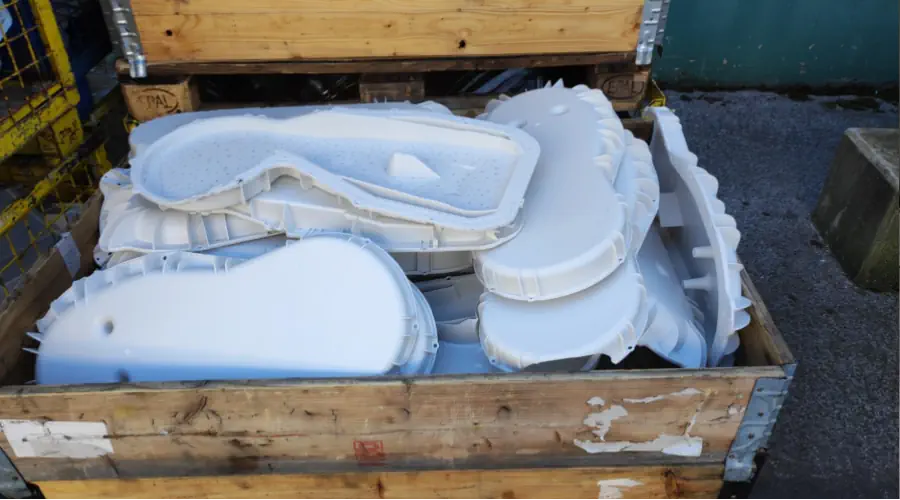
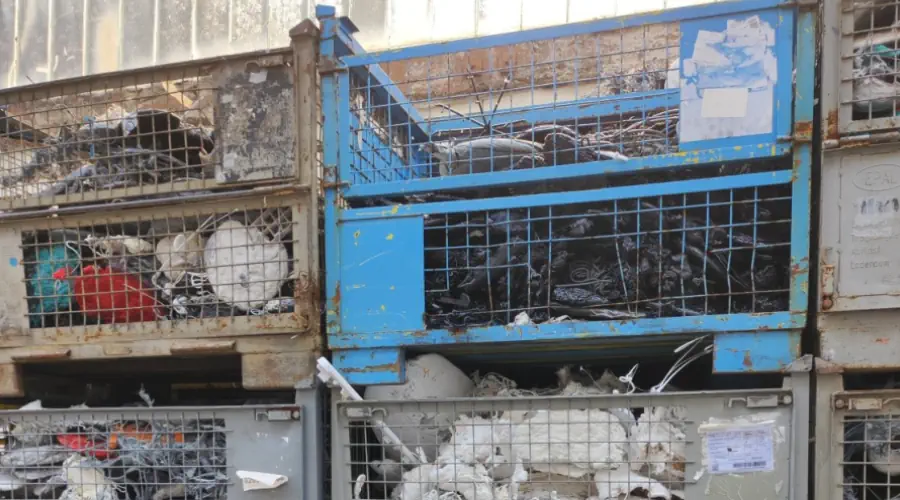
While preparing the project proposal, we conducted an analysis of waste flows in the factory and assessed which flows could be included in more circular models - especially within our own production or in cooperation with external partners. We identified key material flows in production, with a special emphasis on discarded plastic semi-finished products, which represent a large environmental footprint. Thus, at a very early stage, we identified discarded material from the injection molding of plastic components, so-called cake, as a major environmental problem. In recent years, we have discarded more than 200 tons of such material as waste annually.
"The analysis was the basis for finding opportunities for reuse. Together with our project partners, we began to actively research and define possible scenarios for the reuse of discarded material and increasing the circularity of our products," says Simon Kotnik, project coordinator at Gorenje.
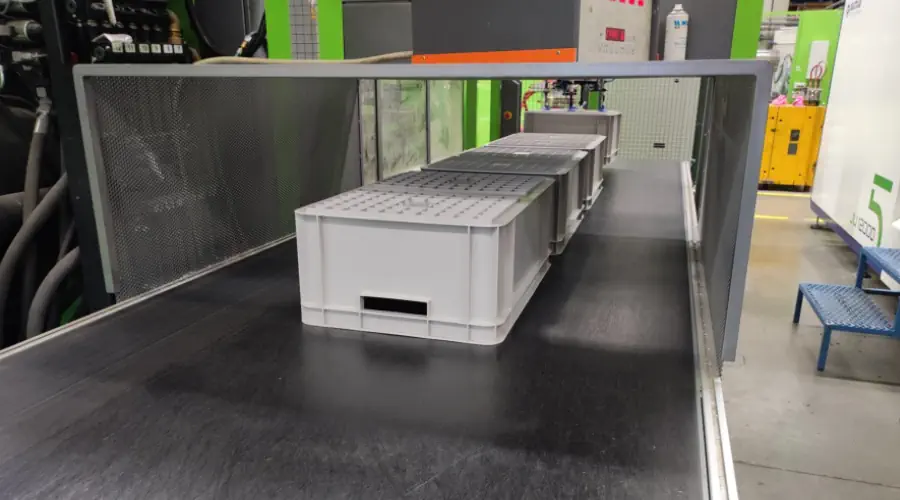
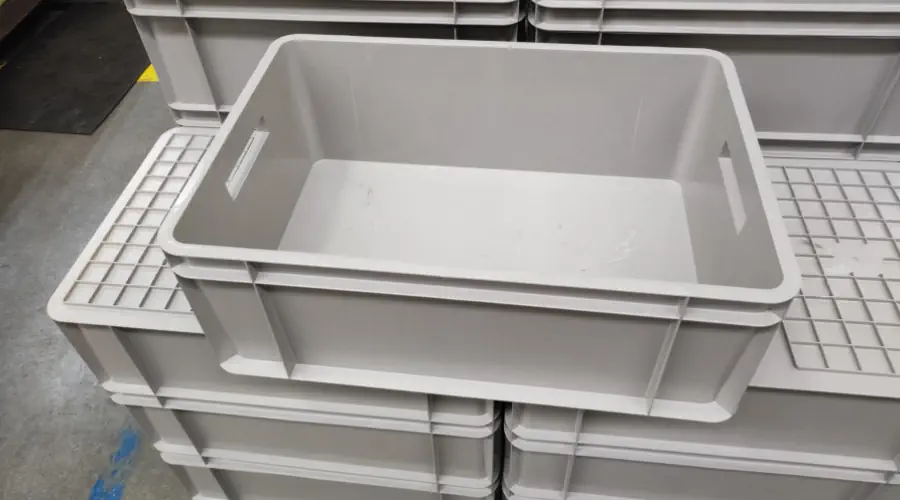
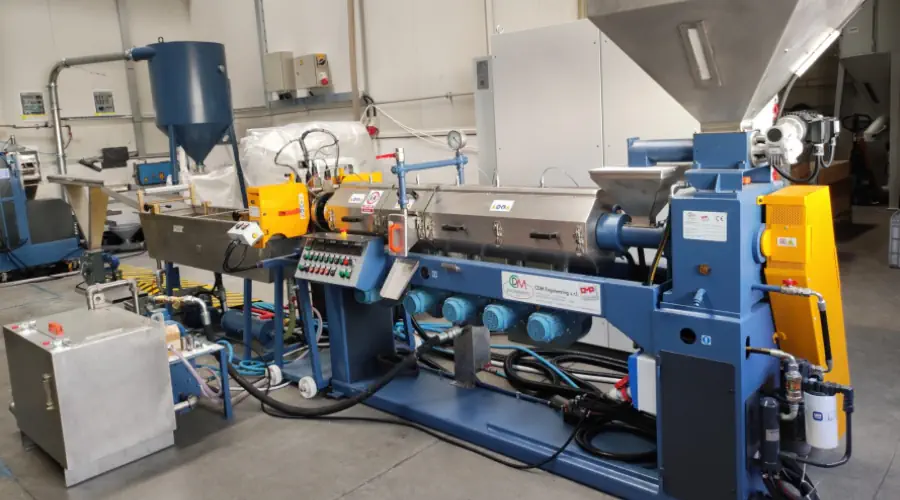
Together with our partners Omaplast and Tecos, we studied and tested the possibility of grinding and producing granulate from discarded material, which proved to be feasible. "We were looking for a new product in which we could use the raw material obtained in this way. The main guideline was to use as much discarded and obsolete material as possible, so we looked for a product that was design-insignificant and found a "clump", a standard box that we use extensively in our production and that we had purchased from external suppliers in the past," explains Kotnik. The business plan also confirmed that it was an excellent solution. "We then researched available equipment for grinding waste material and purchased and installed it at the beginning of the year. avili grinding line. We also researched the available equipment for re-extrusion of the material obtained by grinding and purchased and installed an extruder in March. We have developed the aforementioned “grower” crate and ordered an injection molding tool.”
In the coming weeks, the company will complete the installation and perform a security acceptance of the ordered equipment and test the circular concept, which we will confirm in the case of a plastic crate injection molding. At the same time, we will also optimize the production of crates and digitalize the process by automatically adjusting the injection molding parameters. The next key step will be to find other semi-finished products where we could introduce such a model or where recycled plastic could be added at least partially during injection molding.
“The Incircular project represents a very good example of successful international cooperation between companies and research organizations, which focuses on developing solutions for a specific challenge from our company. At the same time, the subsidy obtained made it easier for us to purchase new equipment to introduce a new circular business model,” said Kotnik.
As part of Hisense Europe's sustainability strategy, we are constantly working to increase the use of recycled materials in our products, reduce waste, promote sustainable transport and establish more sustainable supply chains. We are introducing 100% recyclable packaging for our products and recycling 96% of the waste generated in production. We will allocate more than 5 million euros to such projects.